“I’d tried everything. The first week on NightShift, I slept through the night three times. That hadn’t happened in a year. By week three, almost every night. My husband noticed before I did — he said I stopped tossing.”
KAREN M., 54
Portland, OR
The 3 AM Wake-Up
What researchers at the University of Leeds discovered about sleeplessness may change the way you think about rest.
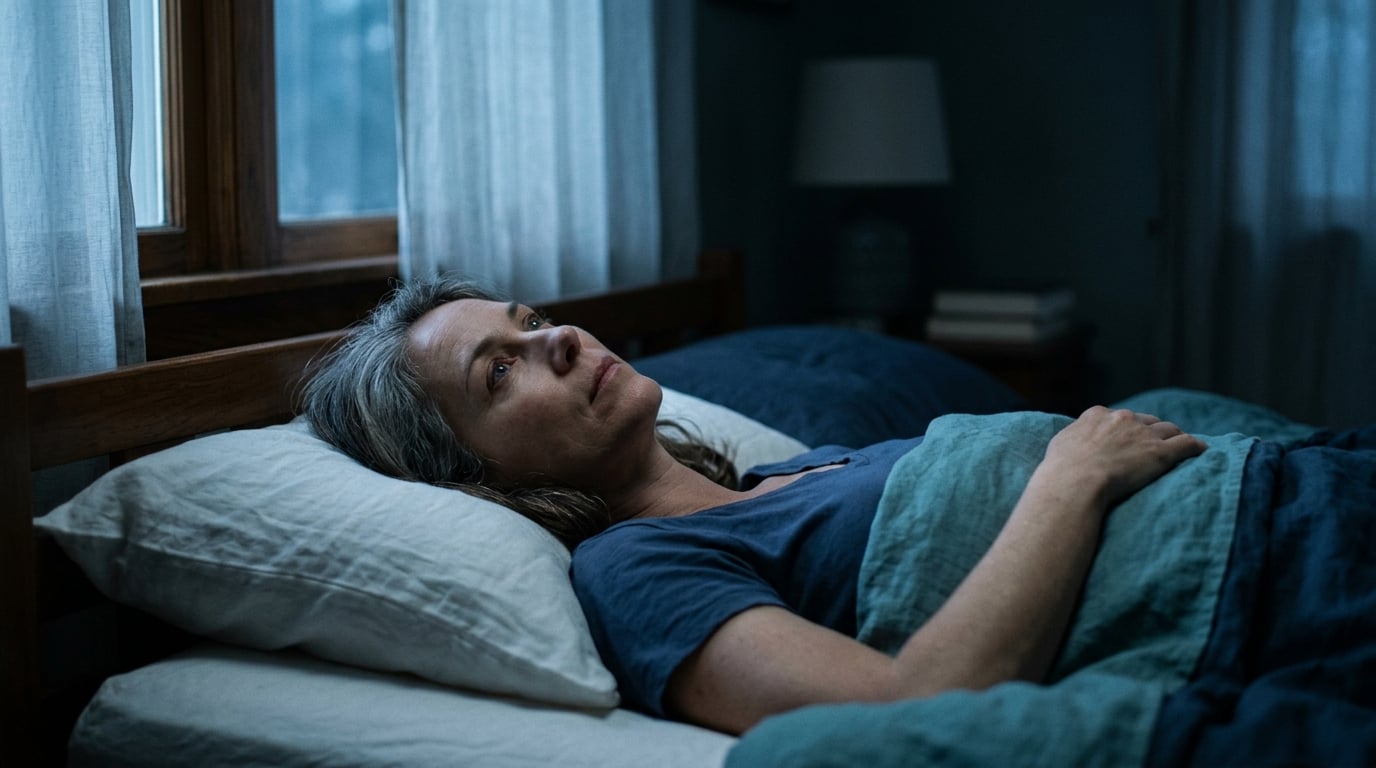
She stared at the ceiling.
3:07 AM. The alarm clock glowed red. In five hours she’d stand before a conference room full of people, presenting quarterly numbers she could barely remember in daylight.
Her mind wouldn’t stop.
The mortgage. Her daughter’s college applications. That noise the car started making Thursday. Each thought arrived uninvited, sat down, and refused to leave.
She’d tried melatonin gummies. Lavender pillow spray. The “sleep hygiene” routine — no screens after 9, cool room, dark curtains. Three meditation apps.
Nothing worked.
And the worst part wasn’t the fatigue. She was becoming someone she didn’t recognize. Snapping at her kids before breakfast. Forgetting things she never forgot. Sitting in her car in the office parking lot each morning, summoning the energy to walk inside.
If this sounds familiar, keep reading. What researchers at the University of Leeds discovered about sleeplessness may change the way you think about rest — and what restores it.
Melatonin doesn’t keep you asleep. It signals your brain that sleep time has arrived. The doorbell, not the door.
If your problem is falling asleep, melatonin may help. But if you wake at 2 AM, 3 AM, 4 AM with your brain running like a motor that won’t shut off — melatonin was never built for that.
of adults reach for melatonin first when sleep breaks down — a tool designed for a different problem.
2023 National Sleep Research Institute survey
Seventy-eight percent. All reaching for a tool designed for a different problem.
So what is the problem?
Dr. Sarah Chen, a neurochemist who spent eleven years studying sleep-wake cycles at the University of Leeds, puts it bluntly:
“Most chronic sleeplessness isn’t a melatonin deficiency. It’s a magnesium deficiency compounded by an overactive nervous system. The brain receives the sleep signal. It can’t calm down enough to obey.”
Think about that.
Your brain knows it’s time to sleep. Your nervous system overrides the message.
Dr. Chen’s research identified two mechanisms that lock the brain in this state:
First — Depleted Magnesium
Magnesium activates the parasympathetic nervous system — the “rest and digest” mode. Without it, your nervous system stays in low-grade fight-or-flight. Even lying still in a dark room, your brain behaves as if something is about to go wrong.
68% of American adults fall short of adequate magnesium intake. Not close.
Second — Excess Glutamate
Glutamate is an excitatory neurotransmitter — it makes the brain go. In healthy sleep, glutamate decreases through the evening. In chronic poor sleepers, it stays elevated. The engine keeps revving.
This is why counting sheep fails. Why “just relax” is useless advice. Your neurochemistry works against you.
But here’s what Dr. Chen’s team found next.
In a 2023 clinical trial, Dr. Chen’s team paired magnesium glycinate with L-theanine, an amino acid found in green tea.
Magnesium glycinate is the most bioavailable form of magnesium. It crosses the blood-brain barrier and calms the nervous system at the source.
L-theanine does something different. It increases alpha brain wave activity — the same waves present during deep meditation. It doesn’t sedate. It dials down the noise. The racing thoughts. The to-do lists. The 3 AM spiral.
Separately, each has solid research behind it.
Together, the results surprised the researchers.
2023 Clinical Trial — Magnesium Glycinate + L-Theanine
fell asleep 22 minutes faster
reported fewer night wakings within two weeks
sleep “significantly improved” after 30 days
The findings appeared in the Journal of Nutritional Neuroscience, peer-reviewed and replicated by two independent labs.
No one can patent magnesium. No one can patent L-theanine. They occur in nature. No pharmaceutical company can own them, mark them up 4,000%, and spend $200 million on television ads.
The money isn’t in the solution. The money is in sleep aids that keep you coming back.
That’s not conspiracy. That’s a business model.
Introducing
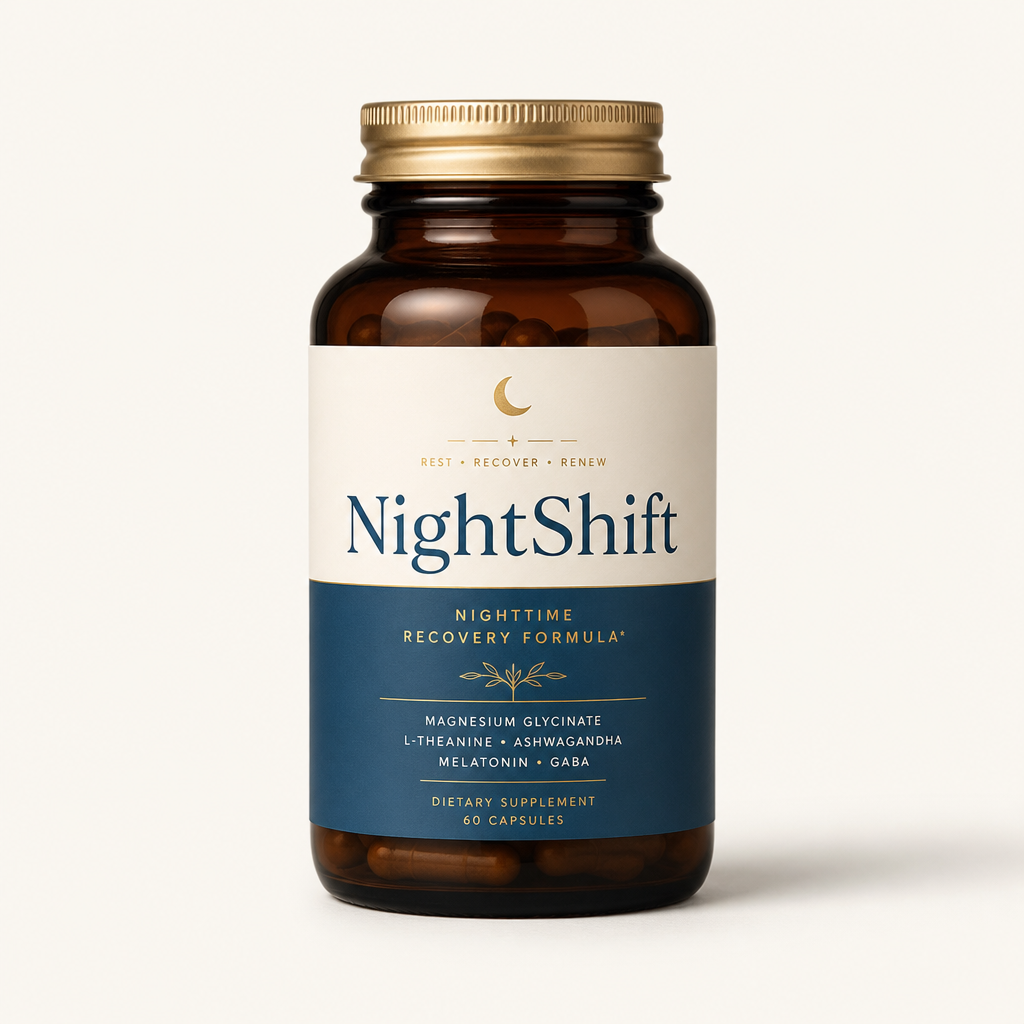
We built NightShift to put Dr. Chen’s clinical combination into one nightly capsule. Three ingredients. No melatonin. No valerian root. No proprietary blends hiding behind vague labels.
Every batch third-party tested. Certificate of analysis on our website. Nothing to hide.
“I’d tried everything. The first week on NightShift, I slept through the night three times. That hadn’t happened in a year. By week three, almost every night. My husband noticed before I did — he said I stopped tossing.”
KAREN M., 54
Portland, OR
“I’m a physician. I reviewed the research before trying it. The Leeds study is solid. The mechanism makes sense. I’ve taken NightShift for two months and recommended it to patients who can’t tolerate prescription sleep aids.”
DR. JAMES WHITFIELD, MD
Internal Medicine
“I don’t write reviews. But this earned one. I’m a different person when I sleep. Patient again. Sharp again. Myself again.”
DAVID R., 41
Chicago, IL
A 30-day supply costs $39.95. That’s $1.33 a night.
$1.33 a night. To fix the thing that quietly breaks everything else.
Try NightShift for 60 nights. If you don’t sleep deeper, fall asleep faster, and wake feeling restored — send back the bottle. Every penny returned. No questionnaire. No retention call. Your money back.
We make this guarantee because 94% of customers reorder within 90 days. When something works, people don’t return it. They tell their friends.
This isn’t about one night.
It’s about what happens when you sleep well consistently. The patience that returns. The focus. The energy you forgot you had. The version of yourself buried under months of exhaustion.
That person is still there.
They need sleep.
Free shipping on U.S. orders · Subscribe and save 20% · Cancel anytime